Showing posts with label Best Actress 1945. Show all posts

Monday, August 15, 2011

Final Conclusions - Best Actress 1945


I’ve started this line-up having seen only one of the films years ago, the very popular nowadays Mildred Pierce. While the other 4 proved quite ignorable or annoying pictures (3 of them scored less than a 5/10 from me), the performances were quite different and fun to discover. It’s easier to criticize than to write about the good stuff, so having to give just 2 stars to 3 of the performances was not as painful as it looks. None of them is truly awful, only that, as I coincidentally predicted, the year has Crawford & Bergman, and then there’s the rest…

My #1 was quite easy to choose, as it was the most complex performance and had the kind of drama I easily fall for, with tears & everything. #2 is also quite obvious, though unlike my winner, it holds the best until too far into the film. After that, the order seems almost randomly, though I clearly preferred #3 to the ones to follow.

Starting with this line-up, I’m also introducing a Best Acted Scene award, which this time goes to:


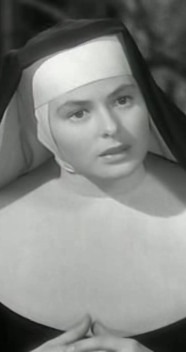
Ingrid Bergman, The Bells of St. Mary’s – the very emotional scene where Sister Mary Benedict asks God to remove the bitterness from her heart, in a moment of pure honesty, humility and willingness to forgive.


Here is how I’ve appreciated and ranked the performances. If you want to go back and read more, just click on their names:


1. Joan Crawford, Mildred Pierce

Few actresses gave such calculated performances like Joan Crawford did. And this is a great example: she’s very in-control, and you can see the experience: she knows where the camera is, when to show tears and so on. But beyond the technical flawlessness, there’s the humility she brings to the role, the easiness to win the audience’s sympathy and the ability to carry the film by herself without any serious acting competition.

the highlight: The introduction of the character, while contemplating suicide.


Above anything else, this is a playful and extremely smart performance. I’m sure she had fun doing it. Ingrid brings joy, optimism, she makes it look so light and charming, and it’s a pleasure to see her on screen. When all this is over, she takes it to a new level, in a 5-7 minute ending that is so dramatically rich and fantastically acted it almost won my heart. A bit of this also in the beginning would’ve made it unbeatable.

the highlight: Her final prayer.


3. Greer Garson, The Valley of Decision
There are some issues with the accent, and of course she’s too damn old to play this character, but Greer has a good understanding of who Mary is. She plays the role with impressive humbleness, which quickly wins the approval of the audience. In a couple of great scenes, she (and not the screenplay) lets us know a lot about class differences and struggles of that kind.

the highlight: Feeling guilty for making Paul fall in love with her, while she’s confessing to Mrs. Scott.


She’s at her best when she’s the bitchiest. But I’ll keep saying: this performance lacks courage, either as to take it as far as making her look crazy, or… well, true, she couldn’t have written her own screenplay. But what I saw was a half-cooked character, with almost no believability. She’s good in the quiet moments, especially of jealousy or cruelty, but otherwise I found it loud, undecided, forgettable.

the highlight: Her unusual honestly while talking to the doctor, both terrifying and funny.


Jennifer chooses to act amnesia as a combination of silly schoolgirl daydreaming and crazy looks of the Norma Desmond style. This doesn’t work. Sure, she has her good moments, I was quite impressed with the final revelation scene, but then she screws up again in the ending. It’s an inconsistent performance, with some bad acting choices, and she doesn’t rise above the awful screenplay.

the highlight: Remembering the night of the murder.


Time to play the guessing game of who got more votes. I don’t think it was an easy victory for Joan, considering the love for Ingrid – but the fact that Ingrid already had the gold man gave voters the edge to go for Joan. Ingrid was obvious 2nd. Gene Tierney was an easy 3rd because, except for Joan, she was the only Oscarless actress here, her film was box-office hit and people still remembered Laura. I doubt the next 2 got more than 5% together; let’s say Jennifer was 4th, because some seem to like her amnesia flick, and Greer 5th because I don’t think many had seen it.


To see other BEST ACTRESS years discussed so far, go to the column on the right.


What’s next: Gonna be talking the Emmy submissions for Actress in a Comedy / Drama, then some updated Oscar predictions, and after that going for another Best Actress field from the 1980s, chosen through a draw.

Sunday, August 14, 2011

Ingrid Bergman, in The Bells of St. Mary's
approximately 61 minutes and 37 seconds
49.5% of the film


The film

At a big city Catholic school, Father O'Malley and Sister Benedict indulge in friendly rivalry, and succeed in extending the school through the gift of a building.

You can read my short review of the film just by clicking HERE.

The film can’t help from being cheesy too often, but I couldn’t have expected differently after seeing Going My Way. The new element to rise the quality of the series is Ingrid Bergman, who’s energetic performance and knock-out final scenes bring more emotion.


Ingrid Bergman as Sister Mary Benedict

Oh, Ingrid, what you do to me, and I haven’t even seen most of your performances. No wonder Joan was nervous on Oscar night: you had the Golden Globe win & the award from the New York film critics! I am picking on Ingrid in a good way, because this is a surprisingly sly performance, she’s so tricky as to take a performance that’s average for 90% of the film and move it into a whole new direction in less than 10 minutes. All the rest of the performance seems like a rehearsal, while she completely has me in some ending scenes that made for the best acting scenes of this field.


Ingrid plays Sister Mary Benedict, the nun in charge of the school Father O’Malley is assigned to. She’s a young nun, very intelligent and wise, strict in many ways, but always up for any kind of well-intended competition. She’s a happy person, very optimistic when it comes to the future of the school, and never hesitating in speaking her mind. It’s a co-starring role that requites lots of smiling, joyous attitude and some fantastic acting abilities for the ending.

For the most of the film, Ingrid is not required to do much. Her acting is very luminous, very natural and comforting. Her presence on screen is always a joy, and she’s very convincing both as a nun, and as someone who feels friendly and comfortable around children, as a teacher and as a friend. While it’s always good to see her in a scene, there are no big dramatic moments to show real dramatic range.

That is, until the final part. There’s a scene that predicts the greatness to come, when she argues with Father O’Malley on not allowing Patsy, a young girl, to graduate. Her stubbornness is very well acted, and with an innocent guilt, maybe a bit of shame, elements that easily sell the scene. There’s also some singing in Swedish, and Ingrid has a beautiful voice. But what justifies the nomination and the almost-win comes from the very last 2 scenes of the character.


The most touching one is when Sister Mary is praying in the church asking God to remove the bitterness from her heart. I’m trying not to spoil the plot, especially the ending, so I won’t go into story details. The camera is on her for about 3 minutes, and it’s a perfectly believable, fantastically acted scene, all on the face. This is what you call an Oscar scene, and a smart move from the writing part, as you simply cannot take your eyes off Ingrid in this scene. It’s a short one, but so well positioned in the story that it surely becomes the one thing to take away from the film.

Very good acting can also be found in the final dialogue, seconds after the prayer scene, when Sister Benedict has a very emotional dialogue with Bing Crosby’s character (great chemistry between these 2, by the way), with both actors creating a special moment, beautifully acted and giving us through face and words more than the screenplay ever dreamed off.


Had Ingrid not won the previous year for Gaslight, the race might’ve gone differently. It’s not because she’s amazing throughout the film, as I’ve said she’s just a sweet, enjoyable presence for the most part, but the big key dramatic moments are so well positioned, it all wows, and it gives the impression you’ve just seen something very special acting-wise. Only Ingrid can make me switch from an almost-3-stars performance to a solid-4 just by bringing it with a lot of determination in the final 5-7 minutes. So: .


Final conclusions soon to come.

Wednesday, August 03, 2011

Gene Tierney, in Leave Her to Heaven
approximately 59 minutes and 33 seconds
57.2% of the film


The film

The story revolves around a femme fatale who entraps a husband and commits several crimes motivated by her insane jealousy.

You can read my short review of the film just by clicking HERE.

The film is an explosion of color, but ultimately a really messy film because of the story and the way it chooses to present its leading character. It’s dull for the most part, and Gene Tierney just doesn’t have the balls to make smart choices, when the director won’t.


Gene Tierney as Ellen Berent Harland

As I see it from a 2011 perspective, there might’ve been 2 or 3 elements to justify the nomination. First, I doubt there was a really big competition for a nomination as the field looked scattered. The other two arguments are much more relevant: I dunno why but Leave Her to Heaven proved to be a massive box-office success, so everybody saw it. And another good argument can be summed up in one word: Laura – many felt like she should’ve been nominated the previous year. So this is how Miss Tierney tricked her way into this nomination…


Gene plays Ellen Berent, a beautiful, rich, smart, charming young woman who falls in love with a kind writer, but her insane jealousy pushed her into crazy, unjustified actions like allowing his

kid brother to die or hurting herself just to get what she wants. It sounds like an interesting role, right? Well, it's not, because for the most of it it’s the most boring interpretation of such a persona.

I think the biggest problem with Gene’s and the director’s take on Ellen is that they can’t decide who they want this woman to be: either a complete lunatic, a psycho – and then it might justify her actions in a more clinical way; or a nice woman who just can’t control her obsession – which would be fine, only that she clearly isn’t, in this story. No regular jealous woman would do the things Ellen does. I refuse to believe that. They’ve chosen the middle path: a sometimes well-intended woman who does horrific stuff – it NEVER works, and it kills any interest I might have in the story.


So the fact is that Gene gets punk’d by the director and the writer and somehow she isn’t willing to take Ellen’s madness far enough in the construction of the character, so that it would justify

her actions. By not risking it, she almost completely loses the believability of this woman, any sense of empathy, any understanding that the audience might have.

Sure, Gene is pretty, and she’s never visibly bad in the role. But the performance lacks courage, Gene plays it safe and delivers a character that too often looks like it’s sleepwalking through the film. Her best acting moment is when she turns a bit bitchy: the lake scene, played with a chilling villain attitude and when served with such lines as After all, he’s a cripple – that feel in the spirit of the character, are delivered the right way, but too few to count.


To me it’s not a bad performance, but a lazy one. You might get some seconds of potential greatness when the camera’s focused on her face, but overall the performance lacks vitality, courage, an understanding of the character and most of all: believability. I have no problem in giving it a . Anyway, I know the performance has its fans, it’s just how I see it. She does play arrogance to perfection, always did – I’ll give her that.

Thursday, July 21, 2011

Greer Garson, in The Valley of Decision
approximately 76 minutes and 16 seconds
60.6% of the film


The film

It tells the story of a young Irish house maid who falls in love with the son of her employer, a local steel mill owner.

You can read my short review of the film just by clicking HERE.

Valley of Decision is all about its supporting cast, and not so much about story or directing. It moves smoothly, but doesn’t risk anything and never reaches heights of story or narrative. The story deserved a much more accomplished writer, to explore its full potential.


Greer Garson as Mary Rafferty


As I’m sure you know, this was Greer Garson’s 5th consecutive Best Actress nomination (a 6th to that point, of a career total of 7), a record of BA consecutiveness equalled only by Bette Davis. Everybody loved Greer in the 1940s and she’s been a category-filler in more than one occasion. This particular nomination is somewhere in the middle: I’m sure nobody was VERY excited about the performance, but it’s definitely not her worst nomination.

Greer plays Mary Rafferty, a poor young honest woman of Irish ancestry in 19th century industrial Pittsburgh. Much against her crippled full-of-hate father’s wish, she goes to work as a maid in the house of the Scott family, the rich owners of the mill. She wins the family’s appreciation, falls in love with their oldest son, but social matters threaten to separate them. It’s a good role, but as much as the screenplay offers her in the first half, the opposite it does in the final part, almost completely ignoring its lead.

There are two main elements working against the performance, both pretty obvious from the start. First, there’s the uncertain age of the character; Greer was 40-41 when the film was made, Gregory Peck was 28-29. :) The fact that it’s black-and-white hides the age difference a bit, but they never mention or suggest how old Mary is. From what I can understand she’s in her middle 20s, which makes it a bit hard to believe and I would’ve appreciated it if they had hinted that Mary was leaning towards spinsterhood – it would’ve made the performance far more believable.

The second element hard to judge is the accent. There’s a BIG Irish accent going on here. I didn’t hate it, but also I could tell it didn’t come natural to Greer; especially when she’s… well… you know… singing. These 2 elements alone stop it from greatness. But allow me to move on to what I actually appreciated about the performance.

Most importantly, I felt like Greer understood the character, especially in the first half. Class difference is an important topic here, and there was at least a scene where my heart felt for this girl: it’s when she tries, in her full shyness and modesty, to announce dinner is served to a bunch of high-class people. As she stands there, in her maid uniform, unable to raise her voice enough, nobody listens to her and she’s invisible. Such a small, short scene had a big impact on me, because Greer made me understand what this girl was going through, in a poorly written yet surprisingly significant moment.

Another success is the display of emotion when having to refuse his love. Her eyes are tearful and she makes small emotional scenes feel meaningful, like she did before. She puts emotional effort in something that didn’t necessarily require it.


Unfortunately, as I said, she’s almost completely ignored in the 2nd part, being offered almost no good moments. And it’s a pitty. I’m running too long here, it’s also because it’s one of the hardest ratings I had to chose till now. Should I give it a 2 or a 3. I initially thought of 3, but considering I’ve previously gave 3 stars to Janet Gaynor (7th Heaven) and Mary McDonnell (Passion Fish), it wouldn’t feel right. So I’m going for a strong , which isn’t that low in my book, considering such ratings have been previously offered to Deneuve (Indochine) and McGuire (Gentleman’s Agreement).

Sunday, July 10, 2011

Jennifer Jones, in Love Letters
approximately 49 minutes and 46 seconds
50.2% of the film


The film

Allen Quinton writes a fellow soldier's love letters; tragedy results. Later, Allen meets a beautiful amnesiac who fears postmen.You can read my short review of the film just by clicking HERE.

To put it simply, I thought the film was an uninteresting cliché that seriously lacked suspenseful writing or any reason to keep interested. There’s a good remembering scene towards the end, but even the ending fails by going for hard to believe jolly nonsense.


Jennifer Jones as Victoria Morland / Singleton

By the time this film was released, 26 year old Jennifer Jones was already an Oscar winner for her saintly performance in The Song of Bernadette and was fooling around with Hollywood’s greatest producer. It was her second of many pairings with Joseph Cotten and the idea of the film sounded more than promising: the perfect role for her to use her prettiness and innocent looks. And yet…


Jennifer Jones plays Victoria Morland aka Singleton, the mysterious interest of a man, a young woman who got tricked into marrying the wrong guy, killed him and now suffers from amnesia. She goes by the name of Singleton, doesn’t know her real identity and falls in love with Allen, without knowing he’s in fact the one writing her the love letters that started everything. No worries, I didn’t do any spoilers as all this info is pretty clear/obvious from the beginning.

I think it’s worth starting with the couple of good elements in this performance. First, there’s an hesitation when she first admits her memory loss to Allen; I think this also comes up in other scenes and Jennifer does a good job in acting a certain shame that Victoria feels – she’s often quite apologetic and embarrassed of her situation.


Also, on the good side there’s the big dramatic scene towards the end, when she remembers everything. It’s the most emotional moment in the film, a much needed one I might add. Jennifer brings it all: tears & deep understanding of the character, but if only that lasted. One minute later she loses herself again in the dreadful writing: she hasn’t even had time to process her dramatic memories that she immediately jumps into Cotten’s arms, with a big smile on her face disregarding the previous highly-dramatic moment, only seconds before.

Those good acting moments can’t compensate for the awful truth: Jennifer doesn’t get above the material. Sure, playing someone confronted with memory loss isn’t easy to do, but most of her choices are uninspired. She also gets the typical clichéd lines & monologues for a character in such position and I admit it’s hard to do justice to such unnatural writing.

The performance is inconsistent, unbalanced and handled by an actress who is either poorly guided by her director or just not experienced enough. There are moments when all of the sudden she goes for wide-eyed reactions of Norma Desmond kind, as if it’s suddenly turning into a horror film or a suspense movie – which this film clearly isn’t.


It’s not the worst Best Actress nominee I’ve reviewed in the past 3 years, but it’s there at the bottom in an unfortunate Top 5. I have no hesitation in going for a .

Sunday, July 03, 2011

Joan Crawford, in Mildred Pierce
approximately 84 minutes and 36 seconds
77.5% of the film


The film

After her husband leaves her, Mildred Pierce proves she can become independent and successful, but can't win the approval of her spoiled daughter.

You can read my short review of the film just by clicking HERE.

Mildred Pierce feels like a classic noir film, but it still has a couple of problems with the screenplay. It starts great, it ends up nicely, but there’s too much of a rushed storytelling in the middle and doesn’t take full advantage of possible, richer directions.


Joan Crawford as Mildred Pierce

How many years did it take for Joan to get her first nomination? Too many, as she had been a movie star ever since the 30s. And she won: partly because some felt it was her time, partly because there was thin competition and mostly because even today it feels like a worthy winner. It’s arguably Joan’s most beloved performance and you don’t see that very often: actors winning for their most outstanding career achievement.

Joan plays Milded Pierce, a woman left by her husband, having to take care of their daughters during economic downturn. She tries to please her daughter Veda by giving the girls a better life: she opens a restaurant, becomes a successful business-woman, gets involved with a sneaky man and just can’t seem to win her evil daughter’s affection. It all ends with a murder. It’s a dramatically rich role about a very determined woman.

The performance is technically irresistible. It’s generally agreed that few actresses had the control over a performance like Joan Crawford had. If you’ve seen some videos/interviews on her acting, they always underline what a pro she was, always knowing where the camera is, when to show tears and so on. And all those assets are perfectly coordinated here: she’s always in control of her scenes in a manner that would seem robotic, except that it’s fabulous because Joan is so damn talented.

She makes it look easy and natural and along the way she also manages to bring emotion to her flawless acting skills. Actually, those emotional scenes are my favorite: the introduction of her character, for example, with the suicide attempt, is PERFECTLY played and set: her gorgeous face, the light, the fur coat and most of all her eyes filled with tears. The slapping scenes are also classics, because Joan is wonderful at playing “vulnerable with dignity” and win the sympathy of the audience.

It’s not a performance that holds a lot of secrets & surprises, because Joan is very good throughout; that’s no reason to blame, but it’s worth mentioning. One thing I didn’t like and it stood out in the film, was the way the screenplay treated the death of Kay and how Joan didn’t do a bit more to grab all the potential of that scene. It was all like: the kid died, one or two tears and now we’re ready to move on. I don’t think that was in the spirit of the character, considering how much Mildred loved those girls. I would’ve expected her to be completely devastated. It’s probably the director’s fault, but Joan should’ve pushed for us to see something that what was more believable for her character.

Joan Crawford gives a remarkable performance, that I probably respect more than I love. I wouldn’t feel completely comfortable in giving more than a but it’s a very strong one. When the camera’s on her in a big, emotional scene there’s perfection that’s hard to match. However, in the regular scenes, she’s her usual great, maybe not with enough surprises or a bit too technical in her acting skills. It’s a very strong performance anyway.